Hypervelocity impacts in tungsten
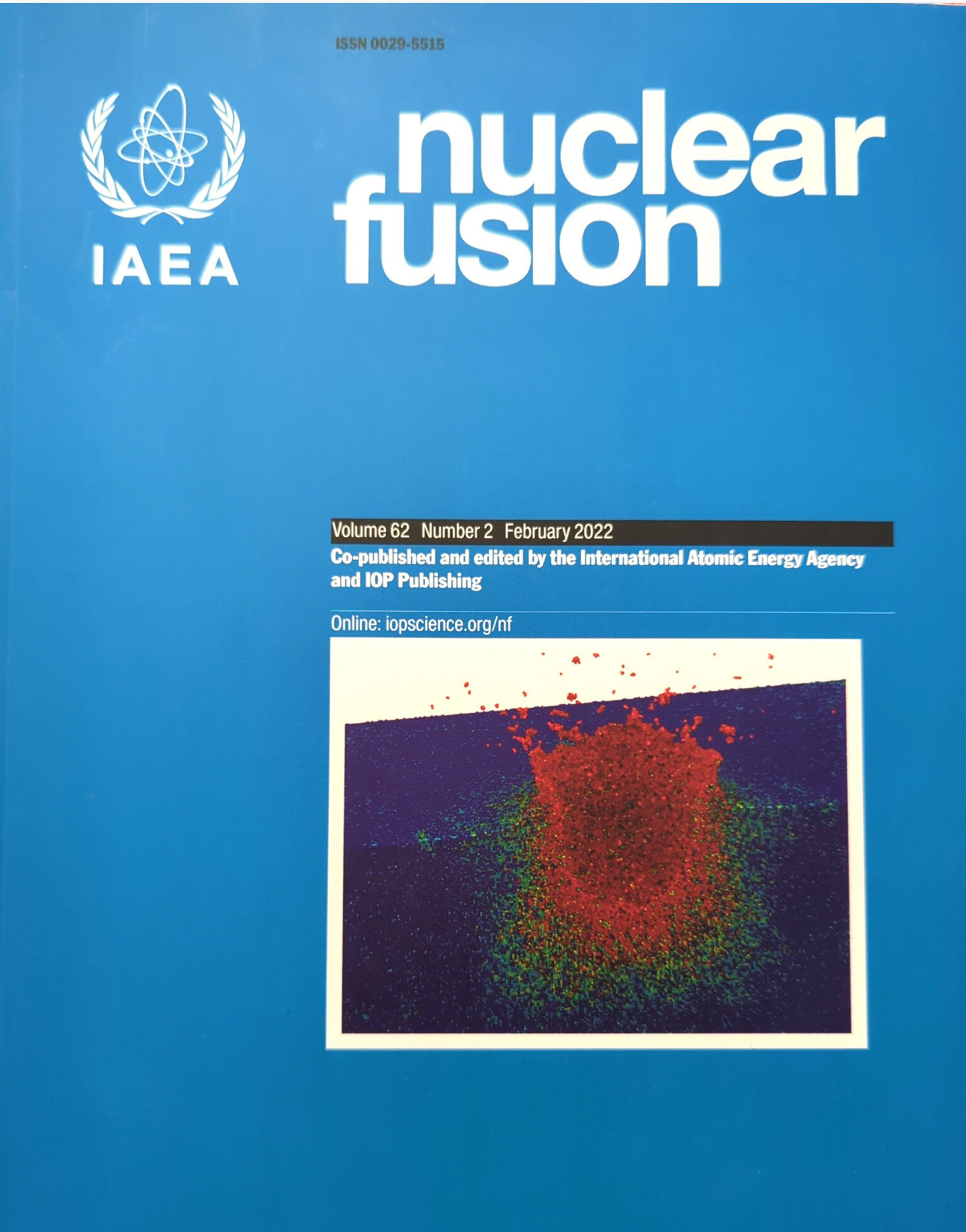
Work by Alberto Fraile, Prashant Dwivedi, Giovanni Bonny, and Tomas Polcar at the Czech Technical University (Prague), Bangor University (UK), and the Nuclear Materials Science Institute (Belgium).
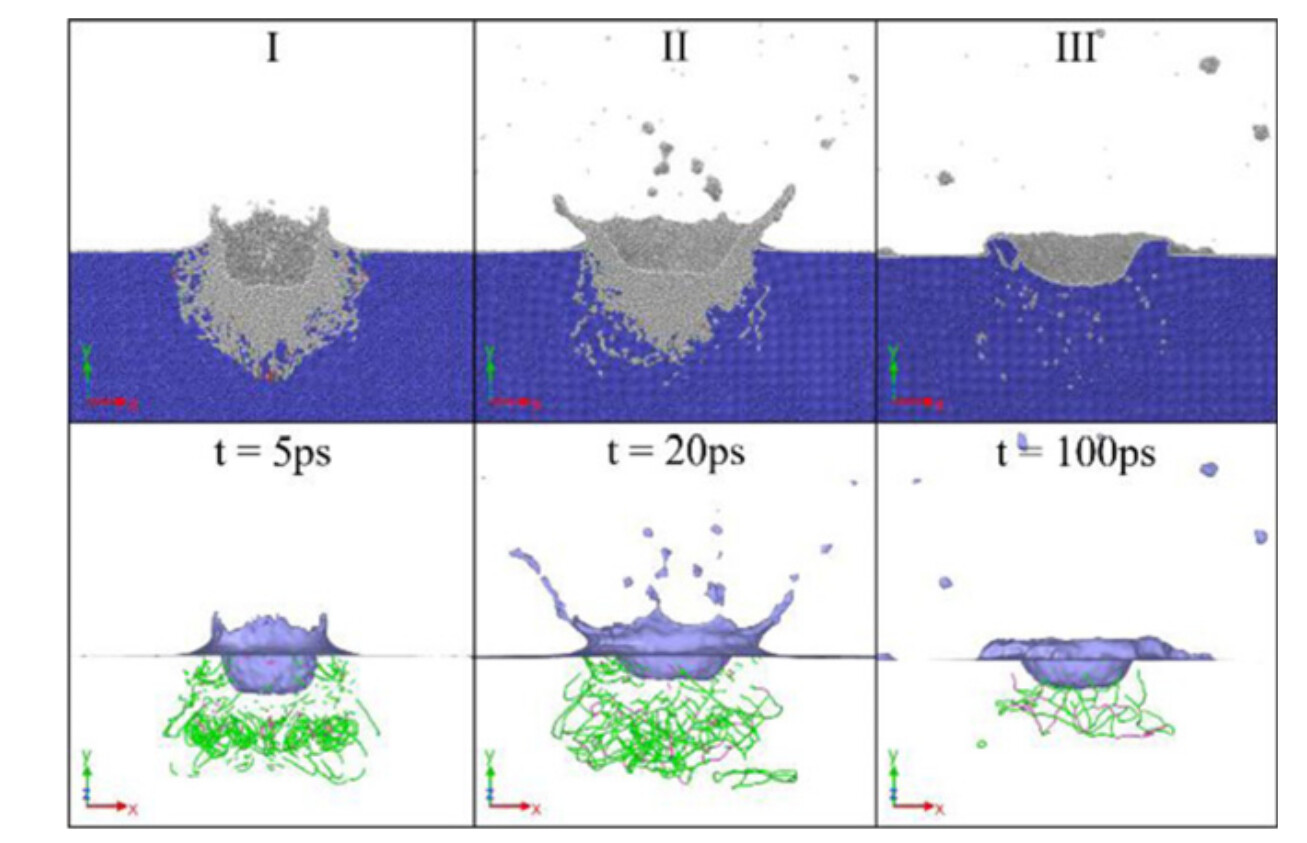
The atomistic mechanisms of damage initiation during high-velocity impacts (up to 9 km/s, kinetic energies up to 200 keV) of tungsten projectiles on a tungsten surface were investigated with parallel MD simulations of up to 40 million atoms. Different stages of penetration — implantation, crater size and volume, sputtered atoms, and dislocations — were analyzed. The crater volume grows linearly with kinetic energy, while the total dislocation length depends on the impactor size but not on the interatomic potential used. All visualizations were performed with OVITO.
Related publications
- Analysis of hypervelocity impacts: the tungsten case, A. Fraile, P. Dwivedi, G. Bonny, and T. Polcar, Nuclear Fusion 62, 026034 (2022).